


-1.svg)






1. The Evolving Challenges of RFP Responses
Regulatory Complexity and Fierce Competition
Responding to public and private tenders has never been more demanding. Companies must navigate increasingly complex technical and regulatory specifications while trying to stand out. The multiplication of selection criteria makes the traditional drafting process tedious and time-consuming.
The Power of Efficiency and Differentiation
To win a contract, simply meeting the minimum requirements is no longer enough. Businesses must demonstrate peak operational efficiency (faster turnaround, zero errors) and articulate a distinctive value proposition.
What makes a winning RFP response?
A winning proposal demonstrates a deep understanding of the client's pain points, highlights highly relevant case studies, showcases innovative solutions (such as a tailored technical memorandum), and reflects a highly collaborative approach.
2. Task Analysis: Human Value-Add vs. Time-Consuming Tasks
To successfully integrate AI into your RFP process, it is essential to map out your editorial workflow and separate strategic thinking from administrative tasks:
|
Human Expertise (High Value-Add) |
Automation & AI (Time-Consuming Tasks) |
|
Deep, strategic analysis of client needs and pain points. |
Information gathering, data collection, and market intelligence. |
|
Developing unique commercial differentiation strategies. |
Document formatting, layout adjustments, and style consistency. |
|
Building client relationships and handling advanced negotiations. |
Grammar and spell-checking, text summarizing, and boilerplate generation. |
3. How Automation Optimizes Proposal Management
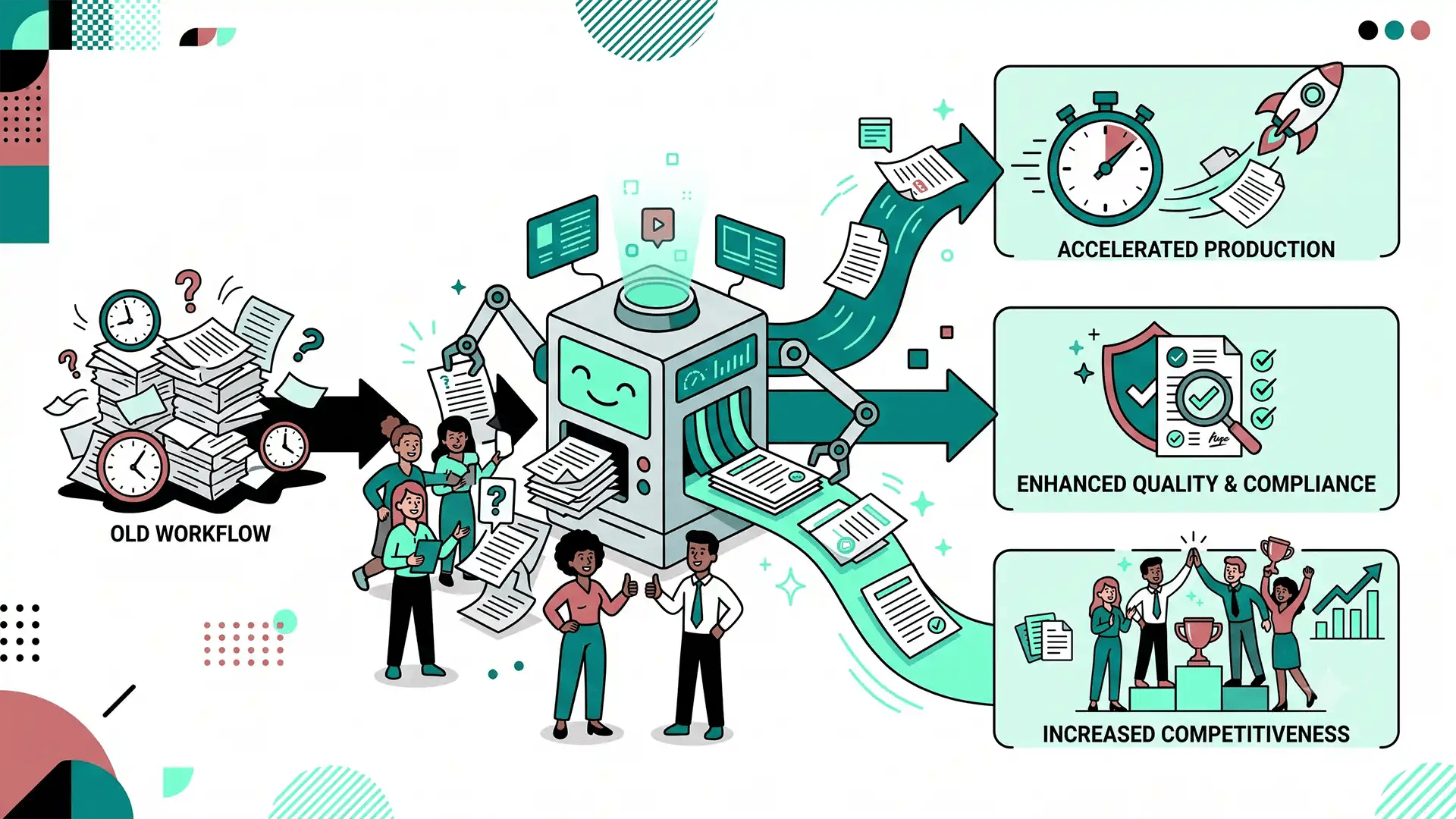
Automation—whether driven by generative AI or a dedicated Proposal Management software—plays a vital role in modernizing your workflow. By automating standard content generation and initial RFP analysis, companies free up valuable time for their bid teams.
Key Benefits of Automation:
-
Accelerated Production Cycles: Handles heavy document styling and content alignment automatically.
-
Enhanced Quality & Compliance: Minimizes human error and ensures brand consistency across all company responses.
-
Increased Competitiveness: Empowers teams to respond to more tenders within shorter deadlines.
4. Elevating Sales Performance with AI as a Strategic Catalyst
AI should be viewed as a powerful assistant to human expertise, not a replacement. Integrating Artificial Intelligence into a global sales ecosystem—alongside your CRM, sales enablement tools, and co-authoring platforms (such as the XaitProposal or XaitPorter suites)—creates an unmatched synergy.
This holistic approach streamlines operational efficiency, guarantees proposal consistency, and ultimately drives higher conversion and win rates.
5. Risks and Limitations of AI: Why Human Validation Remains Vital
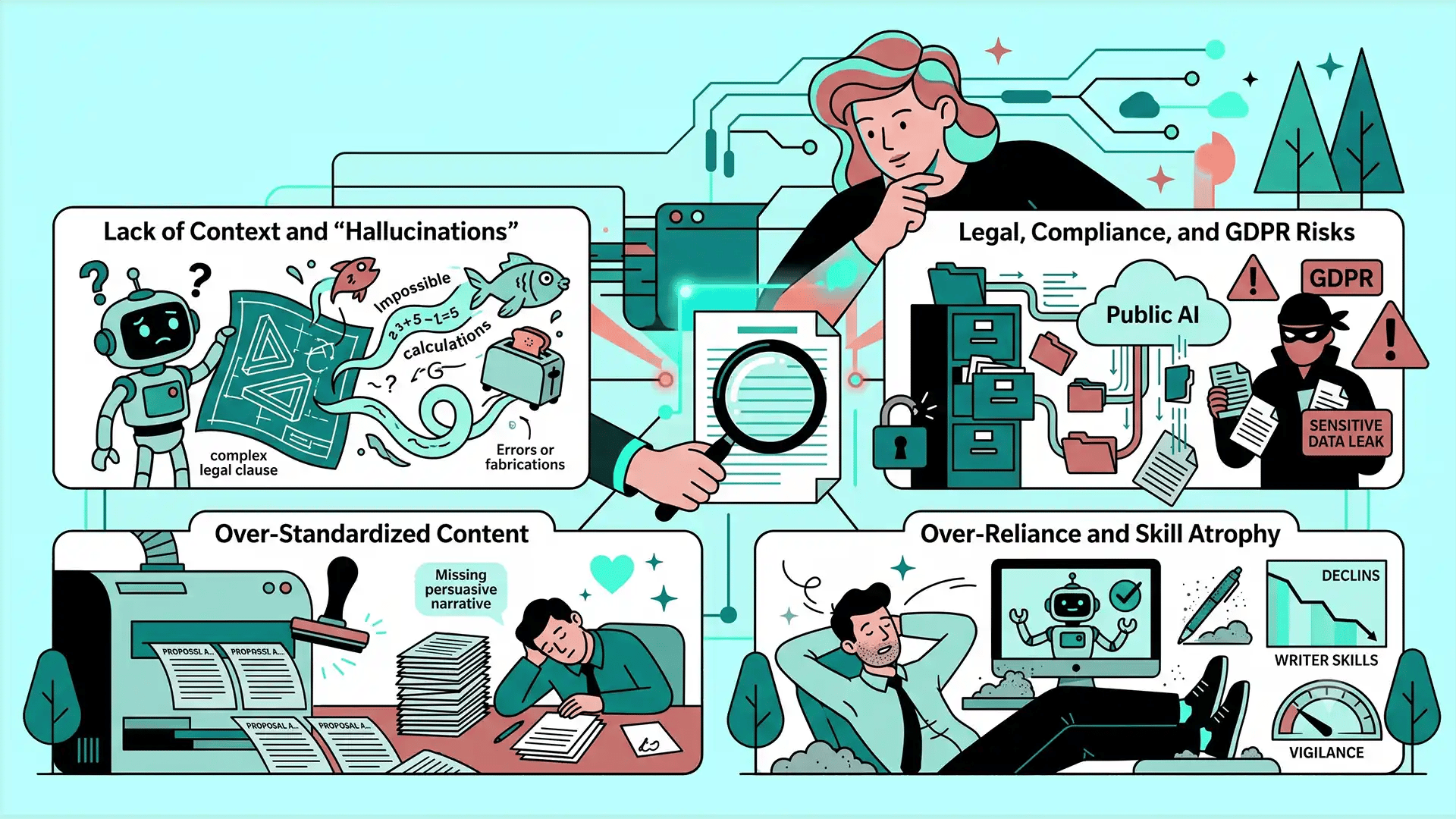
While AI offers immense opportunities to optimize responses, it introduces significant challenges that public, generic tools cannot solve on their own:
-
Lack of Context and "Hallucinations": High risk of errors or fabrications when interpreting complex technical or legal clauses.
-
Legal, Compliance, and GDPR Risks: Potential for accidental leaks of sensitive company data or failure to comply with strict industry standards.
-
Over-Standardized Content: Standard AI models struggle to generate the highly persuasive, engaging, and empathetic narrative needed to win over evaluators.
-
Over-Reliance and Skill Atrophy: Blind trust in automation can lower human vigilance and weaken the internal bidding skills of your proposal writers.
Best Practices to Secure Your AI Workflow:
To mitigate these risks, always anchor AI within a human-centric workflow. Use automation to handle repetitive, baseline tasks, but mandate strict review and validation by subject-matter experts. Prioritise secure, enterprise-grade AI models trained on your specific industry data and your own past winning proposals.
Conclusion: Driving Victory through Human + AI Synergy
In conclusion, when used thoughtfully as a complement to human ingenuity, AI reshapes the RFP response process. Companies that master this synergy—combining advanced automation platforms like Xait’s Proposal Management solutions with the strategic expertise of their teams—will be uniquely positioned to dominate the markets of tomorrow.