



Customer story:

How Prospectives Modernized RFP Responses for a Federation of 11 SMEs With XaitProposal

Prospectives, the shared-services company behind Evariste — a federation of 11 French SMEs spanning public works, landscaping, and civil engineering — replaced a manual, Word-based bidding process with XaitProposal. By automating layout and administrative document generation, the Design & Methods Office freed its team to focus on technical quality and personalization, even as tender volume grew by nearly a third year-over-year.

  • Proposals built in minutes, not hours: A guided questionnaire generates a structured, customized technical proposal foundation in about 5 minutes of clicking.

  • Zero technical friction: Eliminated broken tables of contents, rogue page breaks, and accidental copy-paste data leaks entirely.

  • More time for high-value work: Time saved on formatting is reinvested into deeper file analysis and more personalized bids.

  • Faster administrative processing: Required procurement forms (DC1, DC2, and others) are now generated instantly instead of assembled by hand.

  • Competing with national majors: The Design Office's proposals now match the visual and structural standard of major national construction and public works groups.

Prospectives-logo-c-cropped

Region
France

Company size
26

Industry
Public works, landscaping & infrastructure

Solutions
XaitProposal

What pressures are pushing public works and landscaping SMEs to modernize bid response?

Prospectives' Design & Methods Office is facing double pressure: rapidly rising workload and shrinking response windows. The office went from managing 300 tender files in 2025 to a forecast of nearly 400 for 2026, even as procurement authorities impose increasingly tight deadlines — despite a general decline in the technical quality of the tender documents they provide.

About Prospectives

Prospectives is the shared-services and design office entity for Evariste, a French federation of independent SMEs specializing in tree pruning, green spaces, road networks, sanitation, and civil engineering. Based in Île-de-France, Prospectives centralizes the entire bidding process for the federation's 11 member companies — retrieving tender documents, calculating costs, building technical and financial proposals, and submitting final bids on their behalf.

“Our scope is expanding [...]. At the same time, the tender documents from procurement authorities are declining in technical quality, and response deadlines are being significantly shortened. All of this requires a lot of attention and a crucial need for tools that move fast.”

Bastien Serieys, Director of the Design & Methods Office, Prospectives

Bastien-Serieys-Prospectives-H22A2036-transparent-bw-max-white-360x540

Why did manual, Word-based technical proposals stop working for Prospectives?

Before deploying XaitProposal, Prospectives built its bids in Microsoft Word, copying and pasting text blocks based on each tender's specific Règlement de Consultation (RC), or consultation rules. As the federation grew, three problems compounded: the manual process was highly time-consuming, formatting complexity (tables of contents, page breaks, complex charts) took precedence over content quality, and it became increasingly difficult to maintain global brand consistency while respecting the local identity and trade expertise of each of the 11 member SMEs. Matters came to a head in 2018, when the Design Office received direct client feedback criticizing the visual layout of its offers.

“Word worked, but it reached its limits when our team grew and we developed new business lines. In 2018, we hit a turning point with negative feedback on our offers, particularly regarding layout. We were losing too much time on formatting. Form was overriding substance. We needed a fresh start.”

– Bastien Serieys, Director of the Design & Methods Office, Prospectives

Why did Prospectives choose XaitProposal to modernize its bidding process?

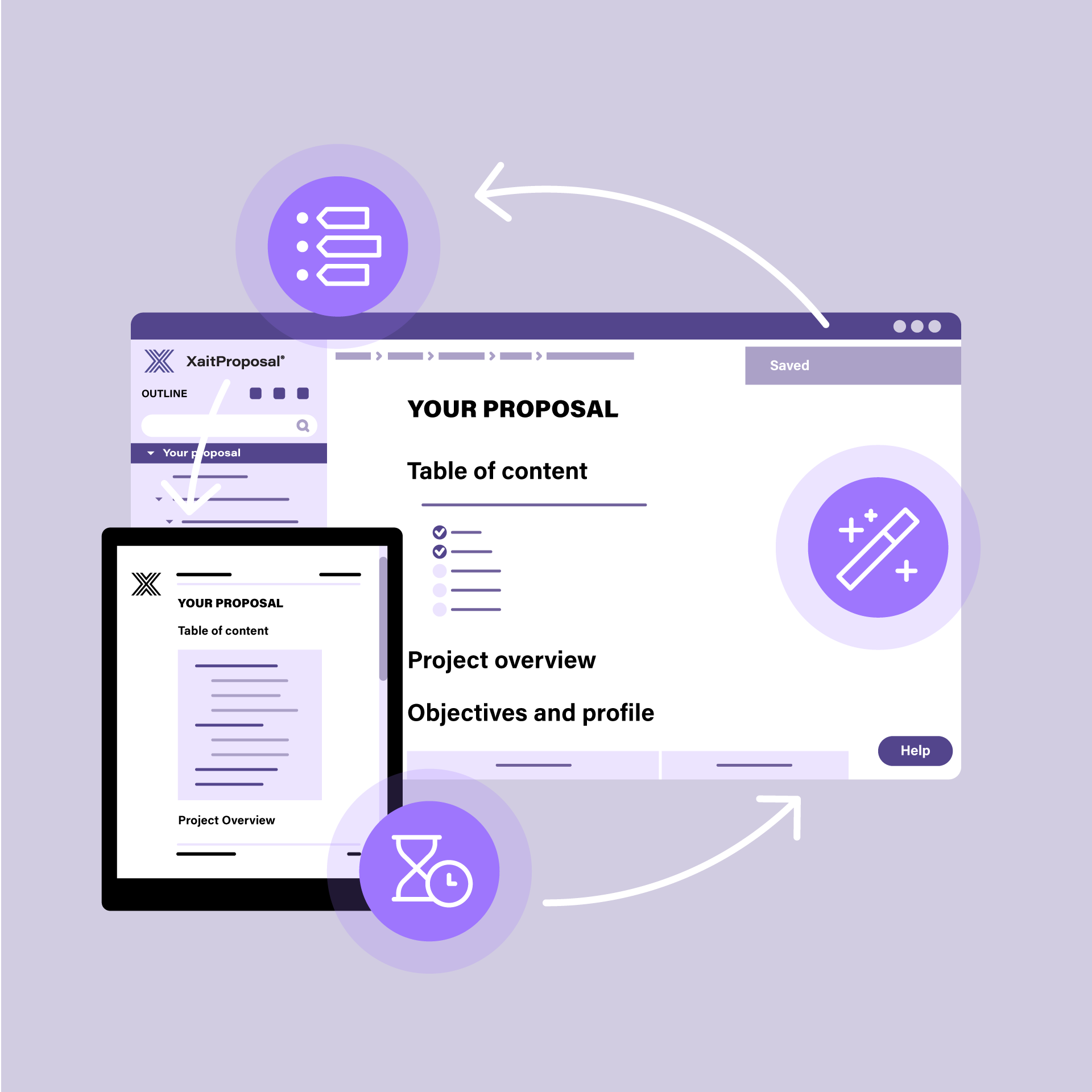
Deployed in 2020, XaitProposal was selected with a clear objective: fully automate document layout so teams could focus exclusively on technical value and "best-value" (mieux-disance) scoring. Prospectives adopted three core capabilities: an intelligent questionnaire for bid managers that builds a structured proposal foundation in minutes, administrative automation that instantly generates required procurement forms like DC1 and DC2 for assistants, and a strict separation of content and style, so document design and branding are locked and managed automatically by the software.

XaitProposal-illustration-mar-2025

“When we met Xait, the promise of 'never worry about formatting again' won us over. It was our primary need. [...] The time saved on layout is fantastic. It allowed us to compete on the same level as major national corporations.”

– Bastien Serieys, Director of the Design & Methods Office, Prospectives

How does XaitProposal improve the performance and quality of technical proposals?

The impact is visible directly in the performance, polish, and overall intelligence of submitted proposals. The Design Office instantly aligned its graphical and structural standards with those of major national construction and public works groups, and word-processing errors — broken tables of contents, rogue page breaks, accidental copy-paste data leaks — have been eliminated entirely. Most importantly, the time saved on formatting is now reinvested directly into deep-dive file analysis and more tailored technical responses.

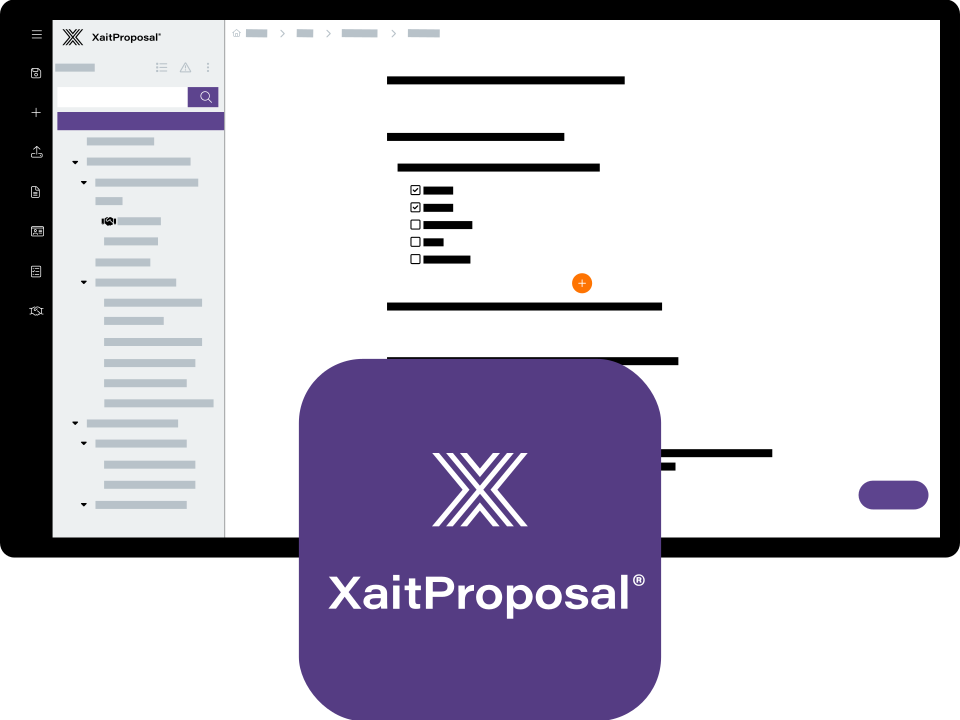
XaitProposal screen mockup with logo

“We no longer have any issues with table of contents management or page breaks. This allows us to spend more time on the files, bring more intelligence to them, and further customize our offers.”

– Bastien Serieys, Director of the Design & Methods Office, Prospectives

What does the future of RFP response look like with AI and human expertise combined?

As artificial intelligence becomes standard in procurement — often used by clients themselves to screen and grade incoming bids — Prospectives is using XaitProposal to win on personalization rather than compete purely on automation. The goal is to use technology to protect, not replace, the federation's "craftsman" identity.

“What will the future of tendering look like in five years? Less human intelligence? Personally, I think the exact opposite: a return to the human element. If we want to save even more time with software, it's to inject even more personalization into our bids. I want to be able to look at the procurement officer and say: 'A human being actually put work into this, Sir.' In a value-driven competition, we must remain closer to the craftsman than the mass manufacturer.”

– Bastien Serieys, Director of the Design & Methods Office, Prospectives